Top 10 SaaS Development Companies Founders Trust in 2026
The 2026 shortlist of SaaS development agencies — with the methodology stated, and the four ways tenant isolation leaks in code that passes every test.
Updated — rebuilt with a stated methodology, the tenant-isolation failures we find in audits, a comparison table and our own trade-offs

Contents8 sections
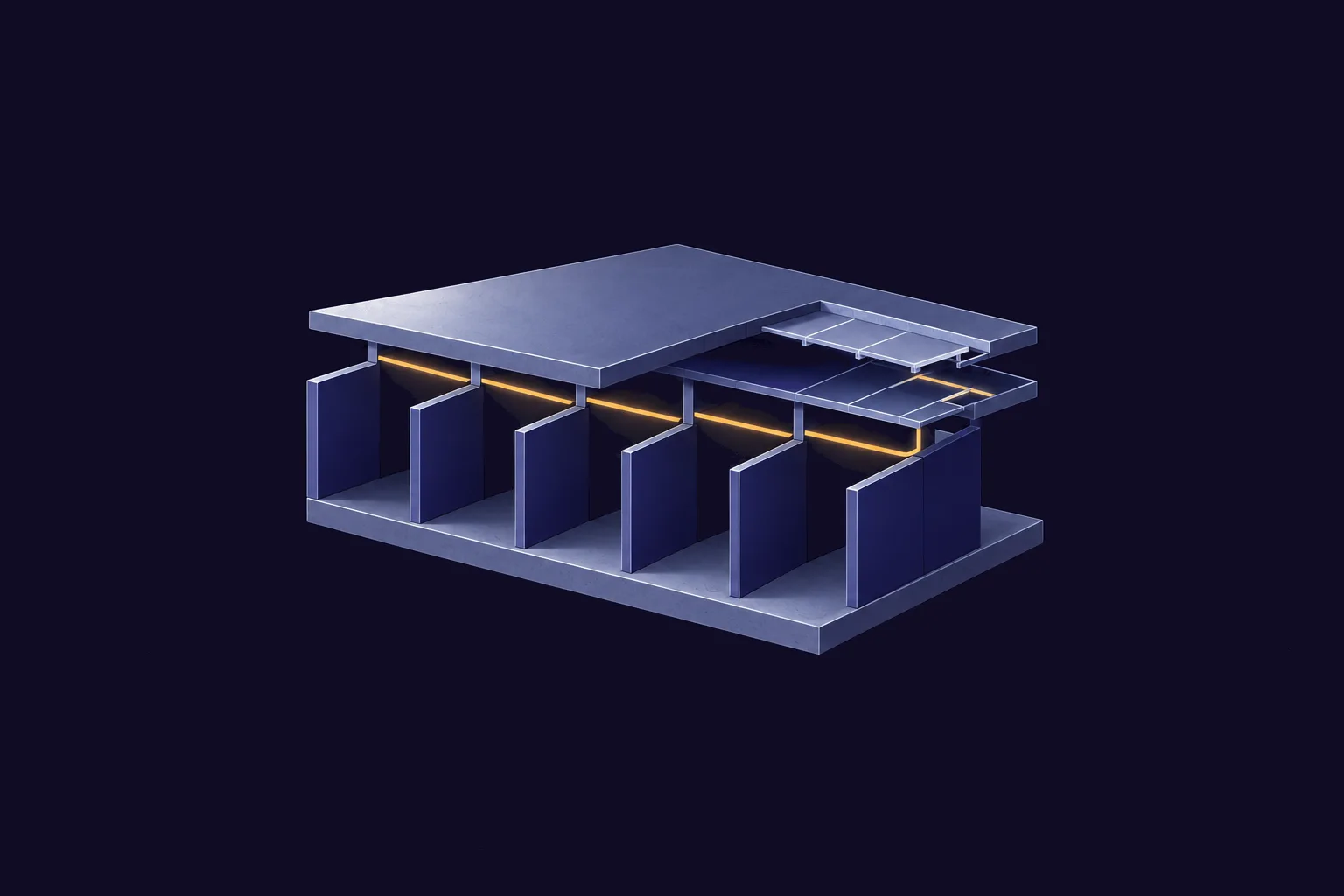
A SaaS product is a database that several companies share and none of them can see each other in. Almost everything that distinguishes a good build from a dangerous one comes down to how seriously that sentence is taken in the first fortnight — and if the product has AI features reading that data, shipping AI features that survive production covers the access question directly — and it is the part of the architecture a founder is least equipped to interrogate on a sales call.
Who's writing this
- 100+
- MVPs shipped since 2021
- 5.0
- Clutch rating
- 30–90
- Day delivery window
- 15
- People on the team
A meaningful share B2B SaaS
Verified client reviews
Published, fixed-price
Westford, MA + Lahore
How did we rank this list?
Four factors. Multi-tenant evidence is weighted heaviest because it is the capability whose absence is most expensive and least visible — a single-tenant app and a multi-tenant one look identical in a demo.
Shipped multi-tenant work outweighs everything else
Weighting applied to each ranking factor
- Shipped multi-tenant SaaS we could verify40%
- Billing and subscription depth25%
- AI features that respect tenant boundaries20%
- Post-launch DevOps continuity15%
Marketing-site shops with a SaaS page scored zero on the first factor, which puts them off the list entirely rather than low on it.
Codeable ranking methodology — our own weighting, not external research
How does tenant isolation actually leak?
This is the section worth reading even if you never shortlist anyone on this page. Broken access control remains the number one category in OWASP's Top 10 — the 2025 edition, released January 2026, kept it at the top and folded server-side request forgery into it. In multi-tenant SaaS the failures share a shape: none of them crash. Every one returns a well-formed, plausible, wrong answer, which is exactly why a test suite stays green over them.
The four we find most often
The owner filter that is optional
A function takes the tenant or user id as an optional parameter and applies it on one branch but not another — typically the lookup by primary key, because an id "is unique anyway". Any authenticated caller then reaches any tenant's record by passing a small integer. The owner belongs in the query signature with no default.
The absent filter that widens the read
if (tenantId) query.where(tenantId)looks defensive and is the opposite: when the id is missing, the query returns the whole table. An absent scope has to mean no rows, never all rows. We have seen this serve one company's data into another's dashboard, and the code path looked entirely reasonable."Not found" and "the lookup failed" collapsed into one
A single null covering both a missing record and a failed dependency produces either a permanent 404 for a transient outage — which nothing retries — or an unscoped read when a lookup blips. Decide both cases explicitly, every time.
Isolation delegated to the database, and never verified
Row-level security and platform record rules are good. They stop being a control the moment anything runs with elevated credentials — a background job, an admin retry, a migration. If each layer cites the other as its safety net, there is no safety net. Write the tenant into the query yourself as well.
The 2026 ranking
Codeable
Our own entryAI-powered software development agency for stealth startups and SMBs — Westford, MA and Lahore.
8.9/10Strengths
- Multi-tenant architecture, billing and permission model treated as the first week's work, not the third month's
- AI features built in-house against tenant boundaries rather than subcontracted to a second vendor
- Fixed-price packages with a published 30–90 day window
- The team that shipped the MVP is the team available after launch
Trade-offs
- We are ranking ourselves first, on our own site — weigh that accordingly
- No standalone cloud or DevOps practice, and no HubSpot implementation case study. We have not done that work and will not imply otherwise
- We do not take over a large existing codebase without a paid audit first — a real friction if you want a team starting Monday
- Fifteen people, so quarterly capacity is genuinely limited
Best for: Founders building their first multi-tenant product who need the architecture decided properly rather than quickly.
Designli
Charleston-based studio with a design-first SaaS MVP process.
8.2/10Strengths
- Strong design practice
- Published fixed-price package
Trade-offs
- Design-weighted rather than architecture-weighted
- US-rate pricing
Best for: Founders who need the product to look resolved before it scales.
Design-ledUSIntellectsoft
Established firm with a strong fintech and healthtech SaaS portfolio.
8.0/10Strengths
- Regulated-industry experience
- Capacity to absorb scope growth
Trade-offs
- Enterprise pricing
- Slower to a first release
Best for: Funded startups in regulated industries.
RegulatedEnterpriseScienceSoft
Large multi-region team with a deep data-engineering bench.
7.8/10Strengths
- Analytics-heavy SaaS depth
- Multi-region delivery
Trade-offs
- Time-and-materials leaning
- Less startup-native
Best for: SaaS carrying serious data workloads from day one.
DataB2BELEKS
Eastern European firm with strong SaaS and enterprise heritage.
7.5/10Strengths
- Senior engineering bench
- Enterprise-grade process
Trade-offs
- Premium positioning
- EU-only timezone overlap
Best for: Funded SaaS startups prioritising EU delivery.
CEESeniorItexus
Multi-region SaaS and fintech specialist.
7.3/10Strengths
- Financial SaaS and payments depth
- Compliance experience
Trade-offs
- Narrower outside fintech
Best for: Fintech SaaS with compliance requirements from launch.
FintechNet Solutions
Mature mid-market agency with a broad SaaS portfolio.
7.0/10Strengths
- Well-documented process
- Consistent delivery
Trade-offs
- Prices above boutique competitors
- Better at modernising than at greenfield
Best for: SMBs modernising an existing SaaS product.
Mid-marketVelvetech
B2B SaaS specialist with insurance and CRM portfolio.
6.8/10Strengths
- Vertical SaaS experience
- Mature delivery process
Trade-offs
- Longer sales cycles
Best for: Vertical SaaS in established industries.
VerticalB2BIflexion
Established firm with .NET and Java SaaS heritage.
6.5/10Strengths
- Enterprise integration experience
Trade-offs
- Slower MVP cadence than the boutiques above
Best for: B2B SaaS selling to enterprise buyers from launch.
Enterprise.NETInnowise
Eastern European multi-disciplinary firm with a broad SaaS portfolio.
6.3/10Strengths
- Scales headcount quickly
- Competitive pricing
Trade-offs
- Closer to engineering arms than to a product partner
Best for: SMBs needing flexible engineering capacity.
CEECapacity
What should you ask before signing?
Four questions, and get the answers in writing
- How will multi-tenancy be implemented — schema per tenant, row-level isolation, or hybrid — and why is that right for my expected scale?
- Where is the tenant filter enforced: one shared helper, or in each handler?
- Which billing provider, and what subscription model — per seat, usage-based, hybrid? Changing this later means a data migration, not a settings change.
- How will AI features read tenant data without crossing a boundary, and what happens to that access when the feature is retired?
How the shortlist compares
| Agency | Fixed price | In-house AI | Regulated experience |
|---|---|---|---|
| Codeable | Yes | Yes | No |
| Designli | Yes | No | No |
| Intellectsoft | No | Yes | Yes |
| ScienceSoft | No | Yes | Yes |
| Itexus | No | No | Yes |
| Innowise | No | No | No |
When we are the wrong call
- You are in a regulated industry from day one. Intellectsoft and Itexus carry experience we do not, and the comparison table above says so.
- You need a cloud or DevOps practice as the engagement. We do the DevOps our own builds need. We are not a cloud consultancy and have no standalone case study to offer.
- You want someone to start on an existing codebase on Monday. Not without a paid audit first — which is the right call and still a friction.
- You need thirty engineers next quarter. Fifteen people is fifteen people.
Questions founders ask us
Schema-per-tenant or row-level isolation?
Row-level is the right default for most early SaaS: one schema, a tenant column on every table, and one shared helper that every query goes through. On the front end, the Next.js agency shortlist covers the rendering and caching decisions that sit on top of it. Schema-per-tenant buys stronger isolation and much harder migrations, and it earns that trade when you have a small number of large customers with contractual separation requirements — not before.
How early does the billing model need to be decided?
Before the data model, because it shapes it. Per-seat, usage-based and hybrid pricing imply different things to count and different places to count them. Retrofitting usage metering onto a per-seat schema is a migration with a revenue risk attached, which is the worst kind.
Can AI features safely read customer data?
Yes, with the same discipline as anything else that reads tenant data — the scope goes into the query, not into the prompt, and the retrieval layer is filtered before the model ever sees a document. The failure mode we see is the reverse: a broad retrieval followed by an instruction telling the model which tenant it is allowed to mention. An instruction is not an access control. The AI development agency shortlist covers how to assess a team on retrieval specifically.
What is the most common thing you find in a SaaS audit?
An owner or tenant parameter that is optional, applied on one code path and not its sibling. It is the same defect nearly every time, it never throws an exception, and it is usually eighty lines away from an identical function that was fixed at some point and whose twin was not.
The short of it
Pick the team that can point to the one place the tenant filter is enforced and explain what happens when it is missing. Everything else about a SaaS build is recoverable. That one is not, and you will not find out from a test suite.
Researched and drafted with AI assistance, reviewed and edited by Syed Arham before publication. Every statistic is linked to its source. Our own work and pricing claims come from our delivery record. How we write and correct